How the ‘Writing’ World Really is…
When I first began writing ‘seriously’, by which I mean
submitting pieces to publishers, I was intrigued by the two schools of thought
facing would-be authors. Subscribing to a couple of monthly writing magazines
back in 2019/2020, I greatly benefitted from the wealth of advice, guidance and
experiences offered by a mixture of successful, seasoned, novice and aspiring
authors who were featured. However, something that niggled me was the
conflicting messages I took from the pages of those magazines. The encouragement
to share your work went something like this: “Persevere with your writing,
anyone can get published if they are tenacious enough to keep sending their
work out to competitions, independent publishers, magazines and various other
outlets”. All sounded very promising… or so I thought.
By contrast, it was hard to ignore the dissenting voices, be it from within the
readers’ letters sections, or some of the ‘experts’ columns who’d regularly
remind the hopefuls that; “It takes years to get anything published, very few
new writers have any success in a world overcrowded with established authors.
And as for getting the attention of an agent... good luck with that!"
Ah… right, so that’s how it works then? Difficult not to become somewhat
downhearted after learning this, especially after regularly seeing letters and
comments complaining that the monthly featured stories always seem to be
submitted by the same clique of authors. I had to agree, rifling through
previous issues, there did seem to be a pattern in which familiar names kept
cropping up – plus, dare I say, some of these stories were not actually that
good. ‘Surely,’ I thought, ‘with the hundreds of submissions from “unknowns”
coming in, there had to be some better stories than those getting published?’
Without wishing to blow my own trumpet (and I’m sure I’m not alone here), I was
certain that one or two of my submissions, at least, were far superior than
some of the short stories that made it to print. I mean, a few that remain
lodged in my mind were, quite frankly, plain awful! Hmm… maybe sour
grapes, Mr Hill?
And so… I gradually joined the ranks of those believing it’s a closed shop, an
exclusive inner-circle that is extremely hard to break into. But then,
seemingly, I broke the mould. One of my previously rejected stories: The
Aftermath, appeared to fit the bill for a historical themed short-story
competition run by a small west country publisher, Park Publications, for their
quarterly Scribble magazine. With little hope or expectation, I'd sent The
Aftermath off… and within days, I received a response; the story had swooped in
to take second place in the competition. Really? I thought the experts said it
would take years to get anything published, I’d only been writing and
submitting for around 18 months. The best was yet to come; after the story was
published in Scribble, the following quarter’s issue contained a number of
readers’ letters offering some very flattering, high-praise for The Aftermath.
Of course, I was then even more determined to ignore the dissenters and push on
in seeking out other outlets to which I could submit my work. By this time, I
had written around eighteen stories, some of which I considered to be ‘very
good’, others not-so.
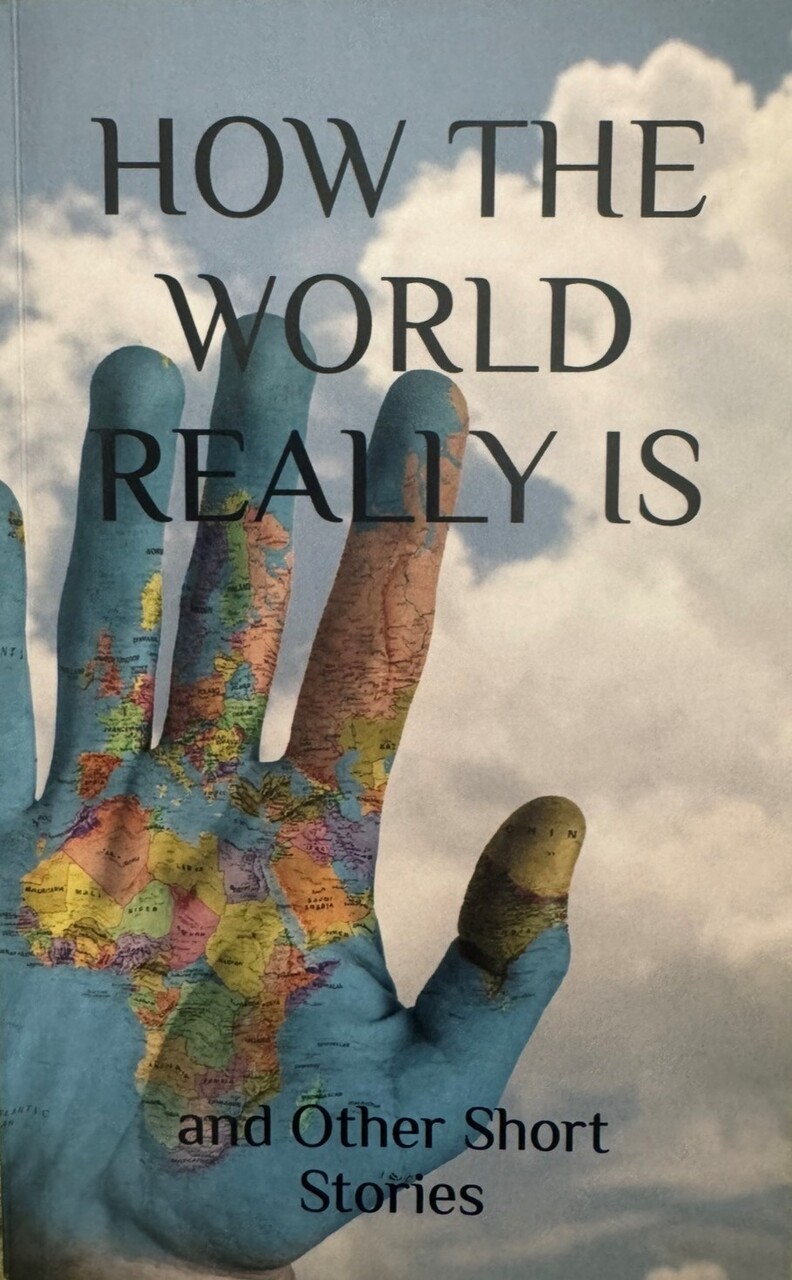
Then came How The World Really Is – a book. Huh? Imagine getting into a book! I
can’t quite remember where I saw it advertised, but this publisher, Audio
Arcadia, stated they were seeking short stories on the theme of spiritual or
ghostly experiences… not run-of-the-mill Dracula or blood and gore-type horror
stories, but something a little different. I instantly recalled that within my
armoury, I had one such story I’d written a few months earlier, a weird yarn
tackling the subject of the afterlife. Spirits Drifting was a slightly offbeat
tale following two spirits adjusting to their new existence after death, both
attempting to piece together the strands of the lives they’d departed. Stuck in
a void between life and death, they sought to make some kind of connection to
the family members left behind who’d still be mourning their passing. Despite
the morbid theme, I really, really enjoyed writing this piece, convinced it was
a different take on anything I’d seen or read before - more than a ghost story.
The publisher obviously agreed, notifying me that they’d like to include the
story in their book and asking of I had any other stories along a similar
theme? Ooh, you know what - I think I might just have one more...
The second submission, Unfinished Business, takes on the subject of suicide,
the story following the spirit of someone who’d taken their own life but was
disturbed by a stranger at the very moment they died. In a twist, the 'ghost'
then haunts that witness, steering him to unwittingly carry out retribution on
the person who’d driven the deceased to commit the ultimate final act. Whilst
an intricate tale, I promise it's not as confusing as I've possibly
made it sound. Again, I greatly enjoyed writing this story, my only misgiving
being that the wordcount restraints placed upon submissions meant that the
ending had to be cut short and left as a little abrupt – the challenging
downside of creating short stories.
It wasn’t until after the publication of How The World Really Is that an old
friend of mine noticed a couple of comparisons to my own life within the two
stories I'd submitted. They wondered if I’d deliberately taken these past
episodes as inspiration or was it that I'd subconsciously drawn upon personal
experiences? They had raised a fair point, I realised. Particularly in Spirits
Drifting, I could see that a tragedy in my family (we lost my 18-year-old
nephew, Nick, to a brain tumour in 2016) had potentially influenced my writing.
I still don’t think this had been my intention, but couldn’t fail to recognise
the parallels once they’d been brought to my attention – so much so that I
immediately spoke to Nick’s dad, my brother, to explain that he may find the
story upsetting and to maybe give it a swerve. Writers – we dig deep, perhaps
too deep sometimes.
Anyway – in a nutshell, that’s how my writing journey began to shift forward
once I'd seen my work in print for the first time. By ignoring the ‘you’ll
never get published’ brigade and remaining determined to reach my goal, I
eventually created a book of my own. In a suitable footnote; The Aftermath
short story went on to become the first two chapters of Tempus Cross (with a
few tweaks). In my mind, this tale was begging to be extended, I loved the
characters and wanted to take them further than a 3,000 wordcount would allow.
The Tempus Cross book offered me the opportunity to do exactly that.
Post Views : 64